 Türkçe
 English
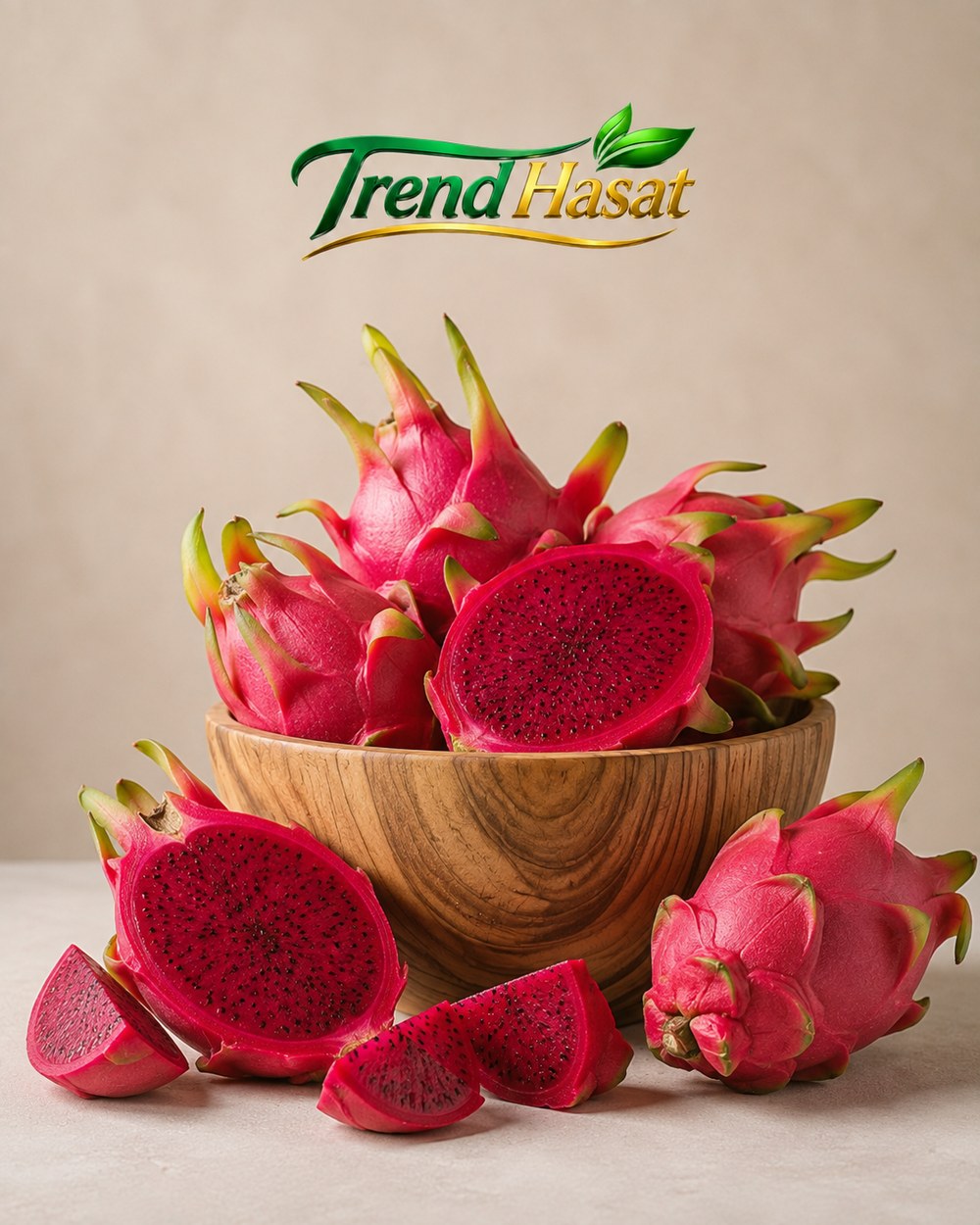
A member of the cactus family, dragon fruit is unmistakable for its fiery scaled skin. The red-fleshed variety carries a deep magenta interior and is noticeably sweeter than its white-fleshed relative.
Taste & Texture
Somewhere between melon and pear, with a light floral sweetness. The texture is juicy and creamy, while the tiny black seeds add a gentle crunch, much like sesame. It is ripe when the skin gives slightly and the tips of the scales begin to dry.
How to Enjoy
- Halve it and eat straight from the skin with a spoon — the purest way.
- Dice into yoghurt, granola or fruit salads.
- Use frozen chunks as a smoothie-bowl base; it lends a natural magenta colour.
- Blend with lime and mint for a refreshing cooler or sorbet.
Storage
If under-ripe, rest at room temperature for 1–2 days. Once ripe, keep in the crisper drawer for 4–7 days. After cutting, store covered and use within 2 days.
Nutrition
A high-water fruit containing fibre and vitamin C. The colour of the red-fleshed variety comes from betacyanin pigments.
This is a natural agricultural product: size, colour and weight may vary by harvest and by batch.
| Product Details | |
| Botanical Name | Selenicereus costaricensis |
| Native Origin | Central America |
| Packaging | 1 piece (approx. 400–500 g) |
| Storage Temperature | +7 °C – +10 °C |
| Shelf Life | 4–7 days once ripe |
Related Products
Tags: red dragon fruit, pitaya, pitahaya, exotic fruit, tropical fruit, buy dragon fruit